We did not go to Zanzibar for a holiday. We went there to ask ourselves a hard question:
Are we crazy?
Because when you say you want to build “the Alibaba of agriculture” from dusty rural villages, with farmers who don’t always have smartphones or even basic trust in systems… it does sound like madness.
And yet, that is exactly what MazaoHub is trying to do.
A Team Building That Was Not About Games
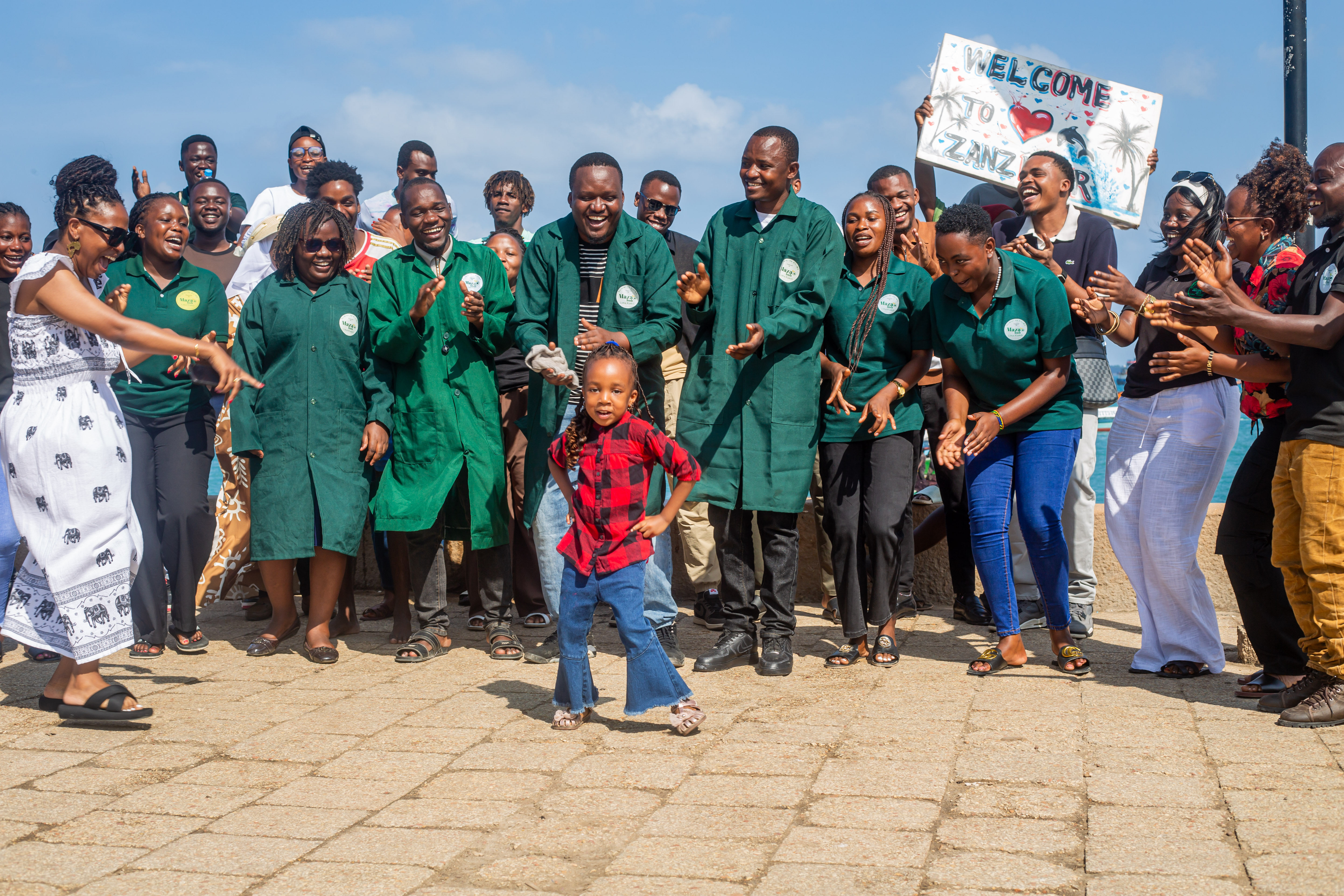
Last week, more than 45 of us—agronomists on motorbikes, call center teams, data people, outreach officers, HQ staff—came together for a team building retreat.

Yes, there was the ocean. Yes, there was laughter. But the real agenda was heavier: to remember our vision and decide, again, if we are truly ready to build it.
We did not speak to each other as “employees”. We spoke as builders.
Builders don’t ask, “What time is it?” Builders ask, “Is the thing we are creating moving forward?”
We spoke about a big, uncomfortable idea:
What if MazaoHub is not just a startup, but a system that must still be alive 25, 50, even 100 years from now?
Who are we to even dream like that?
The Dream: An Integrated System for African Farmers
Our dream is simple to say, but very hard to build.
We want to create a fully integrated, data-driven system for African agriculture. A system where:
- A farmer in a remote village is matched to a real extension officer, not just an app.
- Together, they use a digital agronomy system that covers:
- Soil intelligence
- Crop and variety selection
- Spacing, fertilization, and IPM (Integrated Pest Management)
- Record keeping
- Harvest planning
- Every action becomes data: Soil status, inputs used, planting dates, pests observed, yield per acre…
- That data:
- Guides what inputs are needed, where, and when.
- Powers a distribution system where only verified agrovets and partner Farmer Excellence Centers (FECs) supply those inputs.
- Helps wholesale distributors know where to send seeds and fertilizers—based on real demand, not guesswork.
- Flows straight into CropSupply.com, where buyers—local and global—can see harvest forecasts, quality, and traceability reports, and then buy crops seamlessly from farmers.
From soil sensors and farm visits… to FECs and verified agrovets… to wholesalers and banks… to CropSupply.com serving buyers worldwide…
One integrated system. One flow of data. One story of the farmer.
That’s the dream.
And the honest question is: Can we actually build this, or are we just dreaming loudly?
A Wounded Trust: Farmers, Projects, and Broken Promises
We are not starting from zero.
We are starting from negative trust.
Farmers have seen:
- Projects that come, take photos, collect data, and then disappear.
- People promising markets, then vanishing at harvest time.
- Fake inputs, expired chemicals, low-quality seeds.
- Trainings that feel like “theory” and don’t solve real problems.
So we asked ourselves during team building:
How do we build trust among people who are already tired, disappointed, and quietly angry?
A logo cannot fix this. A mobile app alone cannot fix this. A smart slide deck cannot fix this.
Trust will be built in small, slow, consistent actions:
- Coming back to the same village again and again.
- Keeping promises, especially small ones.
- Delivering the right inputs at the right time.
- Being honest when something fails.
- Standing with farmers in bad seasons, not only in good harvests.
We do not want to be just another name in a farmer’s memory of “wale walikuja wakaondoka” (they came, then disappeared).
We want to be part of their lives.
But then there is another deep wound we had to confront.
Farmers Have Lost Faith in Extension Officers
In many villages today, something painful has happened:
Farmers have quietly stopped believing in extension officers.
Instead of calling an officer, they:
- Ask their neighbors.
- Ask the input seller (even if his advice is biased by sales).
- Rely on rumors, “what worked for someone last season,”
Extension officers, who should be the most trusted technical guides, have become almost invisible to many farmers:
- Some are under-resourced.
- Some are demotivated.
- Some have no tools, no transport, no data, no system.
In many places, extension has lost its attraction.
It has lost its power in the farmer’s heart.
This is dangerous. Because it means farmers are alone, depending on each other’s guesses and memories instead of structured agronomy.
MazaoHub is trying something risky:
- To rebuild trust between farmers and extension officers.
- To give officers tools, data, and systems so they are not just “people with titles” but people with real answers, in real time.
- To turn the extension officer back into a hero in the village, not a forgotten name on a government list.
But can technology + training + systems truly restore that broken relationship?
We don’t fully know yet.
We are trying.
So we asked ourselves:
How do we build trust in people who have already been hurt, cheated, and ignored?
An app alone cannot do this. A pitch deck cannot do this.
Trust will be built in small, slow, painful ways:
- Showing up in the village again and again.
- Listening more than we talk.
- Admitting when we make mistakes.
- Paying on time.
- Sending the agronomist when we said we would.
- Delivering the right inputs in the right quantity at the right time.
- Standing with a farmer when a season fails, not only when it succeeds.
We want to build a community, not just a “user base”.
But how do you build community in a world that keeps saying, “Think only of yourself. Look out for yourself. Trust no one”?
That was one of the biggest questions in our team building.
Tech and Touch: When the Future Meets a Farmer Who Still Lives Offline

Many of our farmers live where:
- Network is weak.
- Smartphones are shared, not personal.
- Internet is “for other people”.
- Technology feels strange, even threatening.
And yet our model is called Tech and Touch.
It sounds simple:
- Tech = data, apps, AI, dashboards, sensors.
- Touch = human presence, relationships, trust, physical centers.
In real life, it means:
- Turning rural agro-shops into Farmer Excellence Centers (FECs) – real physical spaces where farmers can walk in, ask questions, and get services.
- Sending agronomists from farm to farm, not just doing seminar-style training: “Uber for Extension”.
- Using soil sensors and geospatial tools so we treat land like a patient in a clinic, not just “soil that looks okay”.
- Providing advice by phone calls, printed plans, SMS, WhatsApp, and apps—different layers for different levels of digital readiness.
- Building a call center where a farmer can talk to a real expert when they are confused or scared.
We are not building for Silicon Valley. We are building for villages where tech is still a stranger.
The big question:
Can we help farmers move from “Technology is not for us” to “Technology is my daily tool for farming”?
We don’t have a guarantee. All we have is work, patience, and time.
The Core Relationship: Farmer + Extension Officer, Reborn
At the heart of our system is one relationship:
Farmer + Extension Officer.
In our vision:
- A farmer is registered in MazaoHub :
- An extension officer is assigned and becomes almost like a family agronomist:
- The system converts their journey into live data:
- This data then powers:
- Input distribution to partner FECs and verified agrovets
- Loans, insurance, and climate finance
- CropSupply.com, which shows buyers real production data and lets them source crops with full traceability.
We want to move from:
“Farmers and extension officers are disconnected”
to
“Farmer + Extension Officer + Data System = One powerful production unit.”
Can we pull that off at scale, across regions, across countries, across language and culture?
We are trying.
25 Years. 50 Years. 100 Years. Will MazaoHub Still Be Here?

During team building, we did not ask:
“How do we survive the next funding round?”
We asked:
- Will MazaoHub exist 10, 15 or 25 years from now?
- Will it still make sense 50 years from now?
- Will it still be trusted 100 years from now?
In 100 years, none of us will be here. Our children, maybe our grandchildren, will hear stories.
Will MazaoHub be one of those stories?
“There was once a group of people who believed they could organize African agriculture with data and love.”
Or will it be another forgotten project, another logo in a PDF, another name that farmers vaguely remember and say, “They came, they left”?
We do not want to be a story of hype. We want to be a story of faithfulness.
But wanting is not the same as becoming.
Meghan, Sacrifice, and the Price of a Vision

In Zanzibar, I brought my daughter, Meghan, with me.
In front of the whole team, I asked her:
“Meghan, tell them—how many times do you see me at home?”
It was not a comfortable moment. Because the truth is painful.
Building MazaoHub has meant:
- Late nights
- Early flights
- Long road trips
- Missing moments with family
- Carrying the weight of staff, farmers, partners, investors, and a continent in your mind
I told the team:
“Do you know why Meghan is here? She said she wants to help me work, so that maybe I can come home more.”
That is sacrifice. And it is not just mine.
- Our agronomists sacrifice weekends in the field.
- Our outreach team sleeps in guesthouses far from home.
- Our call center answers desperate farmer questions at odd hours.
You cannot build this kind of company with a “5 to 8 hours a day” mindset.
We told the team clearly:
We are not looking for employees. We are looking for builders.
Builders:
- Don’t count minutes; they count impact.
- Feel hurt when a farmer is let down.
- Carry the vision when it is heavy and when no one is clapping.
- Are willing to be misunderstood and even called “crazy”.
So we asked everyone quietly, inside their own hearts:
Are you here to collect a salary… or are you here to build something that might outlive all of us?
Building a System in a World That Teaches Selfishness
We are building in a world that tells people:
- “Be greedy, that’s how you survive.”
- “Trust no one.”
- “Take what you can now, before someone cheats you.”
And we are saying:
- Let’s share data.
- Let’s work together—farmers, agrovets, banks, buyers.
- Let’s build a system where everyone wins if we all stay honest and committed.
It almost sounds like rebellion.
Can a tech-and-touch system really push back against corruption, selfishness, and fear?
We don’t know yet.
We know only this: if nobody tries, nothing changes.
So… Will We Make It?
This is the question that stayed with us as we left Zanzibar and went back to our regions: Morogoro, Manyara, Mbeya, Rukwa, Katavi, and beyond.
- Will we manage to turn thousands of rural farmers into confident users of data and technology?
- Will our FECs truly become trusted “clinics for farms”?
- Will our integrated system—from soil sensor to CropSupply.com—really work end-to-end at scale?
- Will farmers one day say, “MazaoHub is part of our lives, not just an app we downloaded once”?
We do not have the final answers.
We only know this:
- The need is real.
- The pain in the villages is real.
- The calling we feel is real.
- And the work has already started.
Maybe, one day, MazaoHub will be mentioned next to names like Alibaba, but with a different story:
A story not of selling products only, but of giving farmers back their dignity, their power, and their future.
Or maybe we will fail trying.
We are in the middle chapters—not the beginning, and definitely not the end.
And maybe the real, uncomfortable question is no longer:
“Are we crazy?”
Maybe the real question is:
In a continent that desperately needs fair, data-driven, human-centered agriculture systems… is it crazier to try to build MazaoHub, or to sit and watch and do nothing?
We have made our choice.
And we are still asking ourselves, every day:
Are we just a group of dreamers… or are we the builders of a system that will still be serving farmers 100 years from now?
Time—and the choices we make from today onward—will answer that.
And if you are reading this, maybe the real question is:
Will you just watch this story… or will you decide to become one of the builders too?